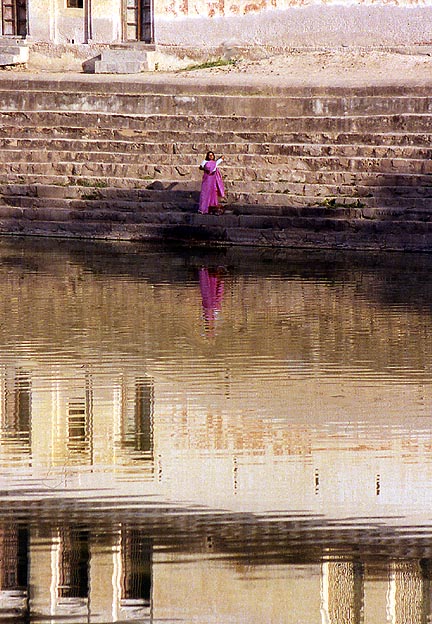
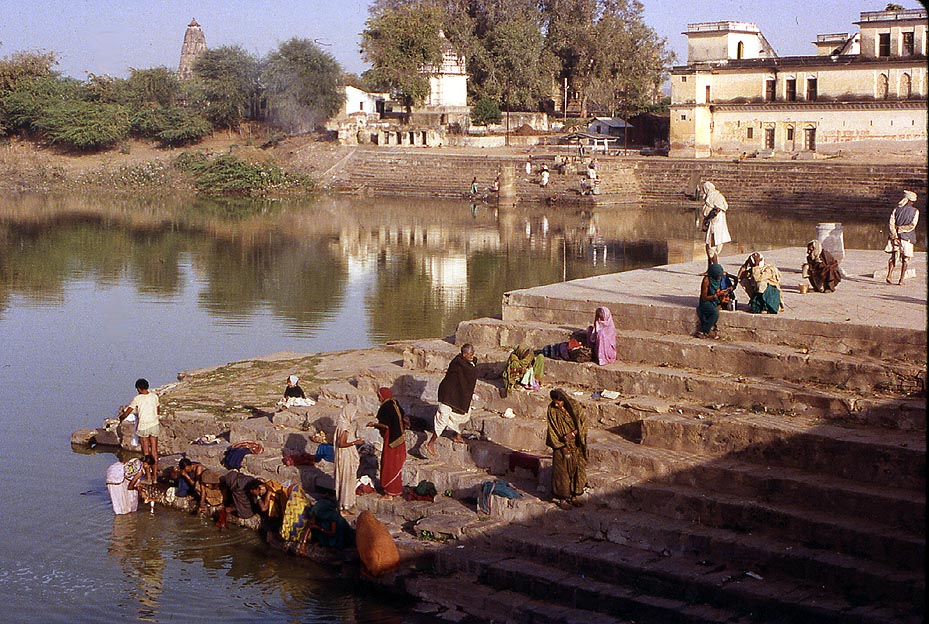
The ghats along the village tank
|
The Tantric Temples of KhajurahoView Larger Map |
View Larger Map |
Click on the pictures, some can be enlarged.
The the temples of Khajuraho are famous for their sculptures, because, in our lugubrious, Western mind, they appear "erotic." The profusion of tantric images on the temples date from the times when the Indian Tantra was still influnced by women - who taught their male consorts how to dance — the images at Alchi are from the same period — and how to make love, not for purposes of procreation, but to please and gain esoteric insights in return.
Built in the 10-11th century by the Chandela kings in a location which was as far from any civilized place as it is still today, the temples were forgotten and remained untouched by the Islamic Mugals and the British until a Victorian colonel in khaki-shorts, knee-socks, and pith helmet happened upon them. He nearly fainted, but his boy-servant photographed the "sinful" sculptures, and that is how their fame spread, as Victorian p o r n o g r a p h y, under the counter...
P o r n o g r a p h y, nothing could be further from the truth. The temples of Khajuraho are the best preserved architecture of India, some twenty extraordinary buildings strewn for miles across a dried out, featureless steppe. And their sculptures display an overpowering dynamic and an exuberance that has no equal in India or, for that matter, elsewhere in the world. The thought that this Chandela "art" like all Indian art ultimately goes back to the Greek artisans who came to India with Alexander the Great is intriguing.
With all this knowledge on one's mind, one easily overlooks the sleepy village which spreads south of the temples. There one finds a glimpse of quaint Indian village life: a "tank" where the locals gather in the early morning for their ablutions, pilgrims who have walked from far away to pray and pay homage to the shrines, and a few flower children from Australia and other places...
|
|
The ghats along the village tank |
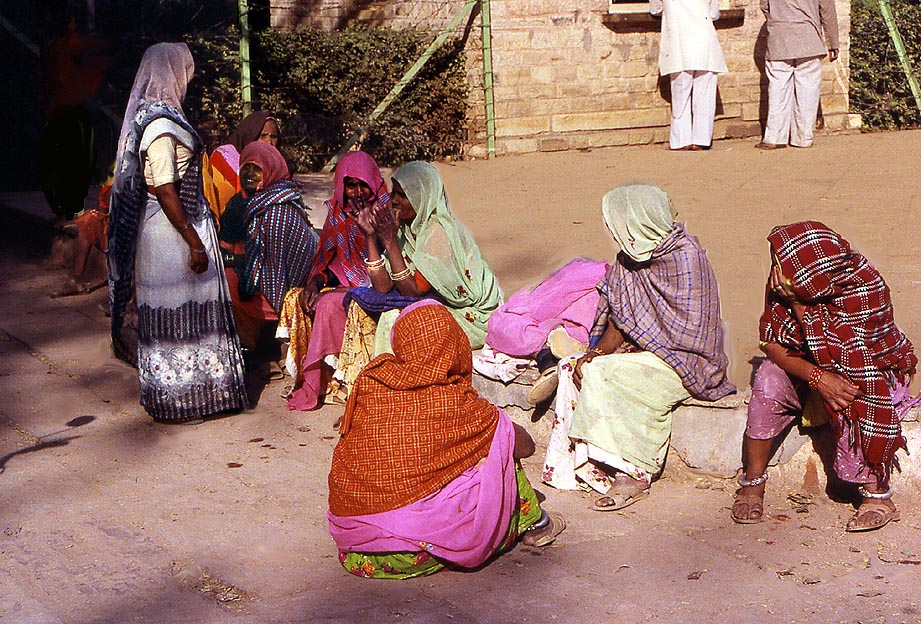
A group of pilgrims had arrived who visited every shrine.... colorful saris led by two spindly old men |
|
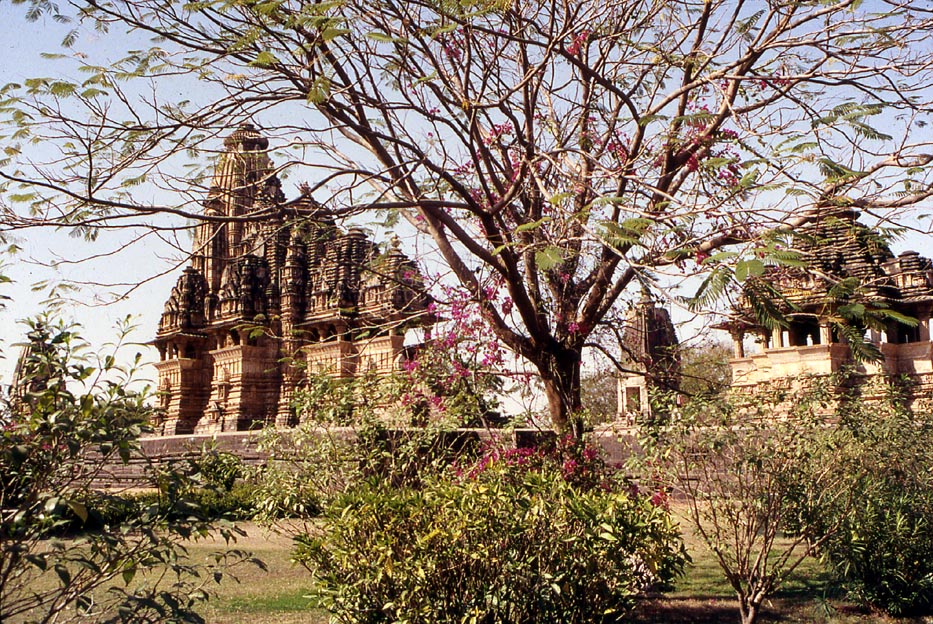
Eleven Hindu Temples stand under thorny acacias in the fenced-off northern enclosure. They are dedicated to Vishnu in his bull incarnation and to his various wives. |
|
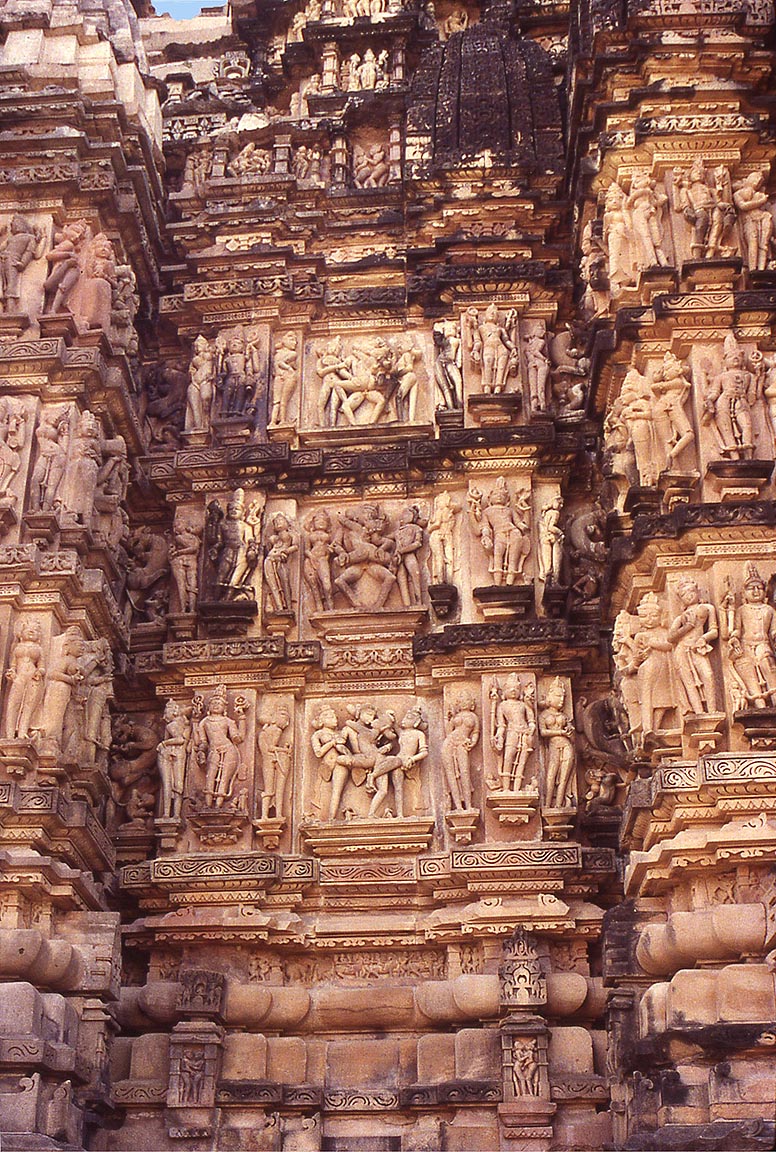
The
largest and best preserved is the Kandariya Mahadev Temple: |
|
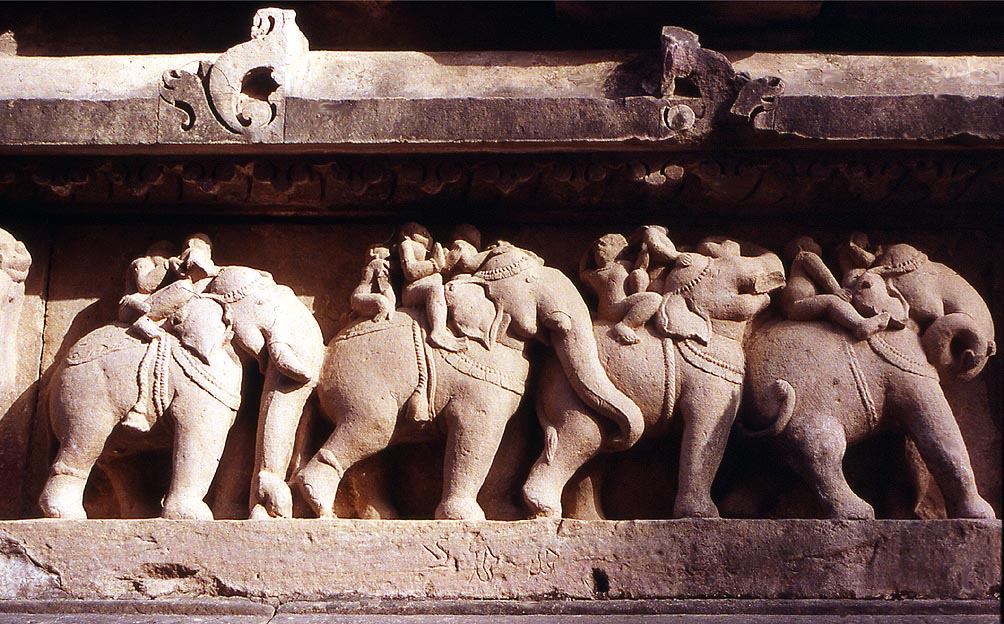
The plinth on which the temple rises is adorned with worldly scenes: a seemingly endless convoy of elephants.... |
|
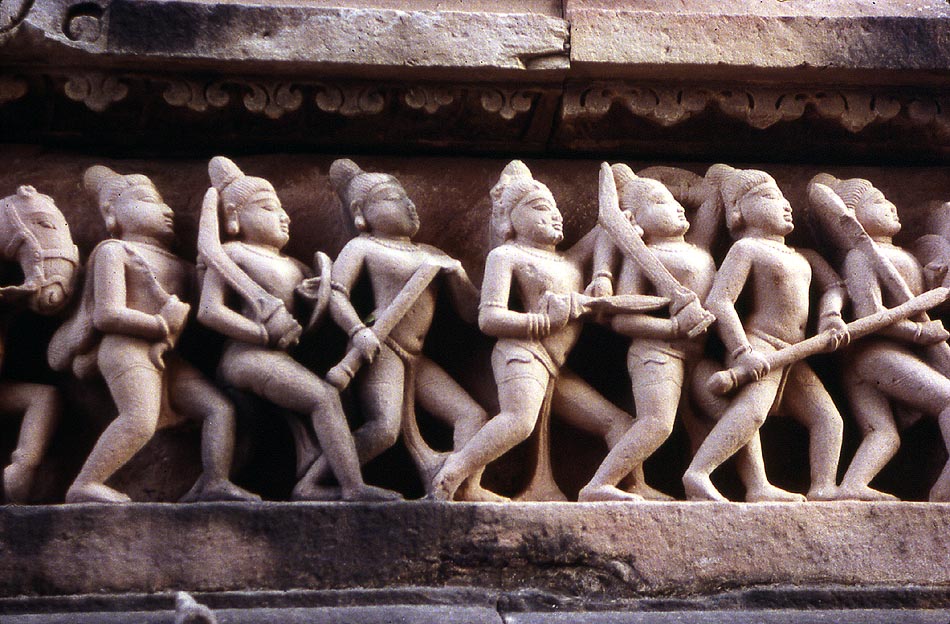
...and warriors |
|
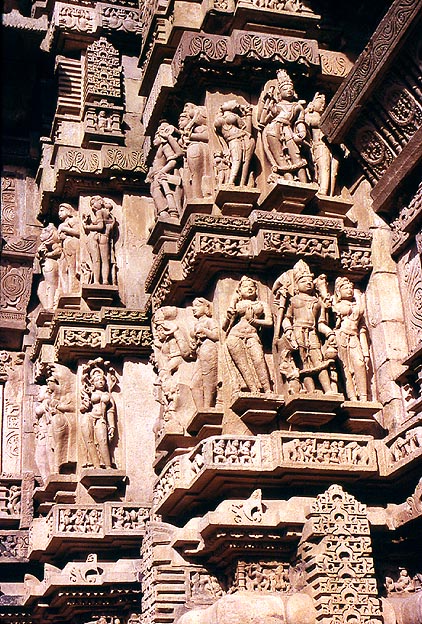
|
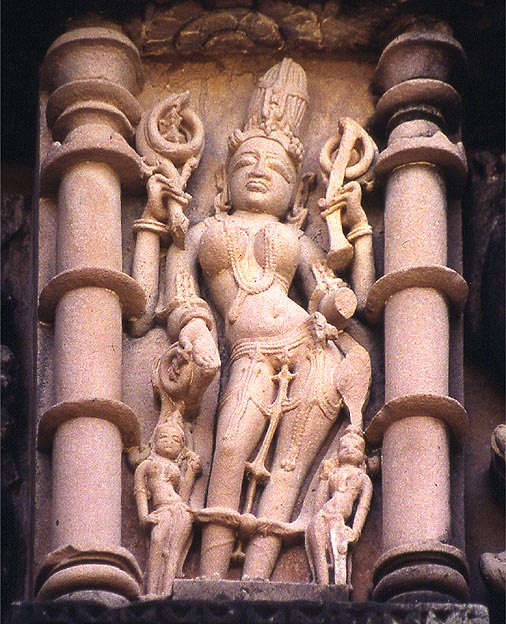
A four-armed Tantric Goddess with attendants — I cannot "read" the emblems in her hands or say who she is.. |
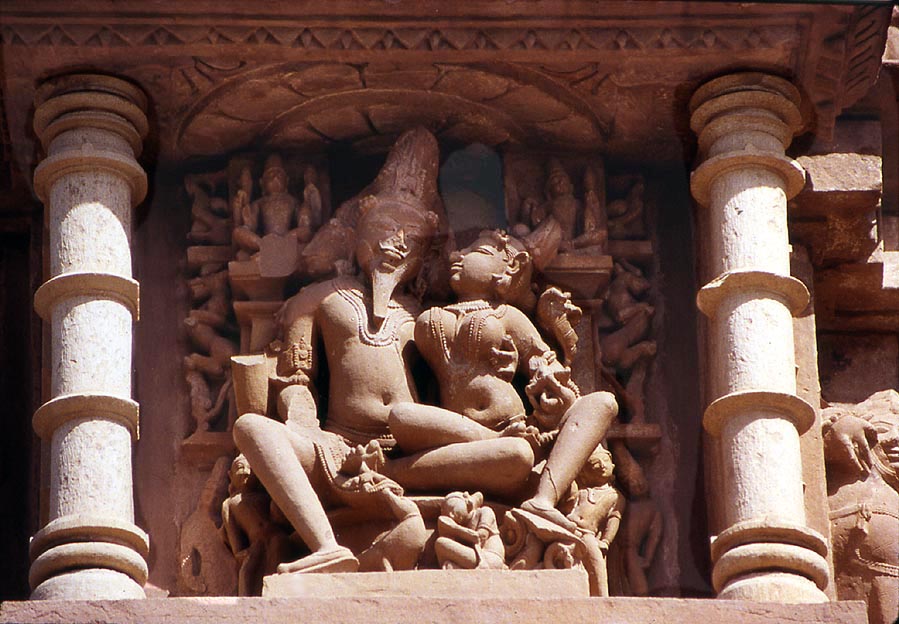
A mithuna couple, obviously Gods attended to by smaller
earthlings.
|
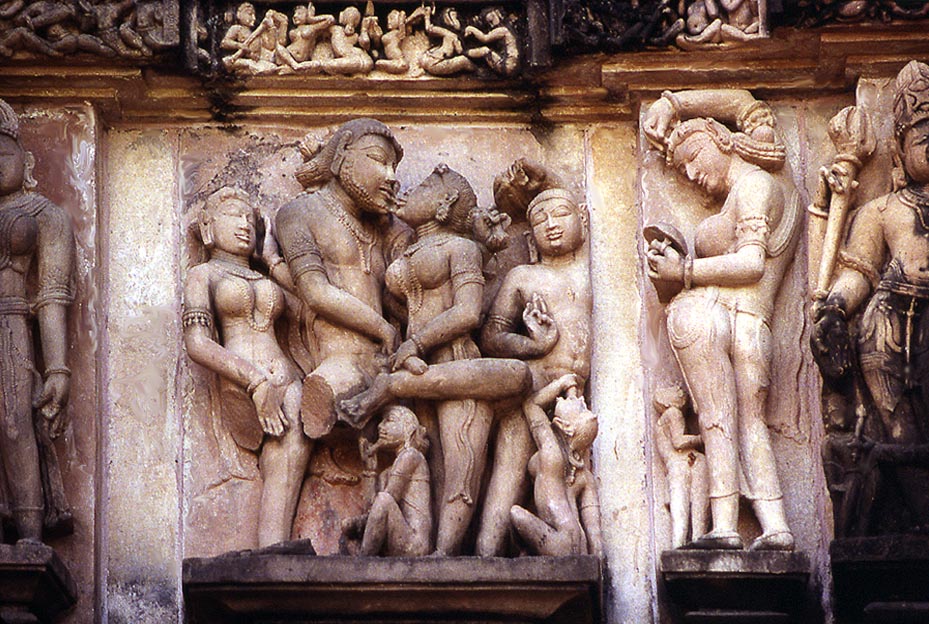
An engaging foursome and a girl admiring herself in a mirror.
|
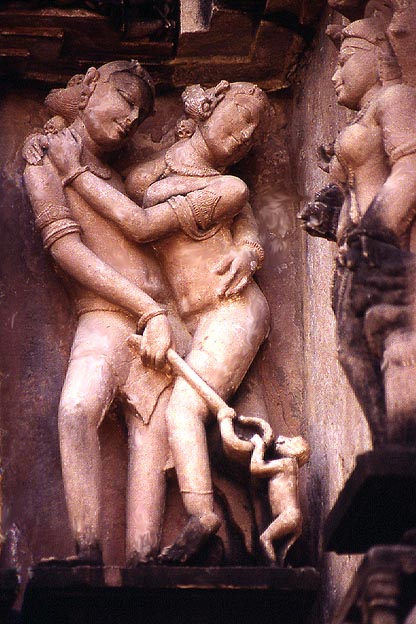
One of the most often photographed couples, and... |
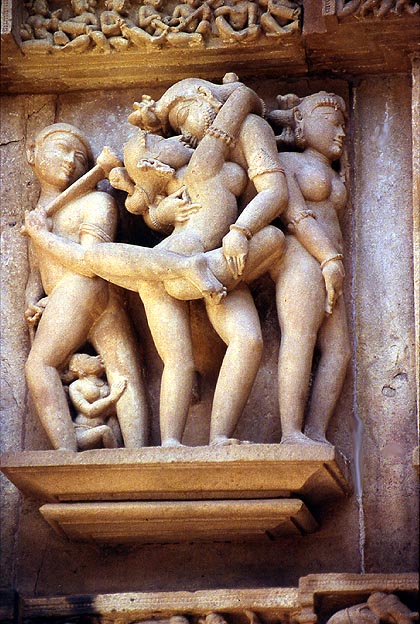
...because of the light stone, one of the most beautiful. |
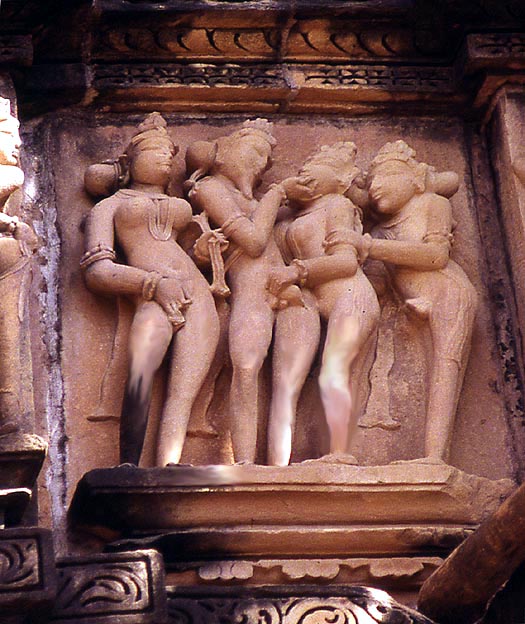
A bearded God cupping the chin of his consort. |
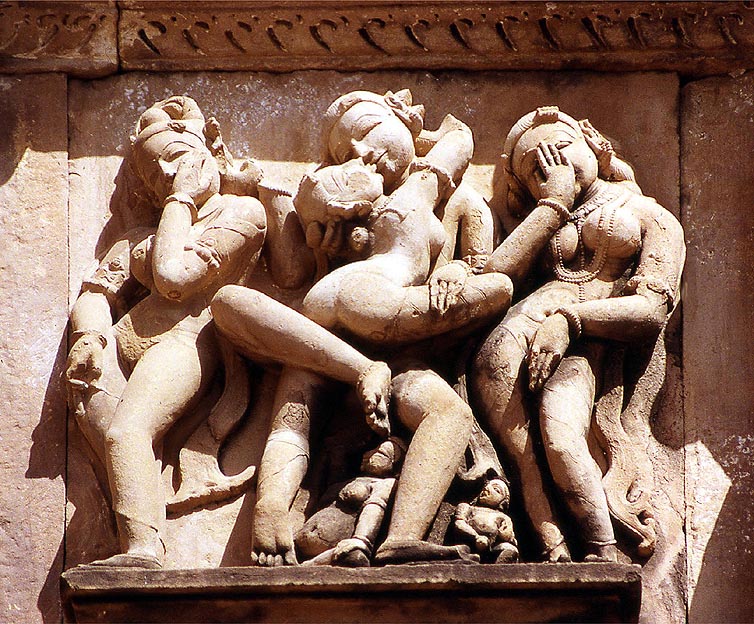
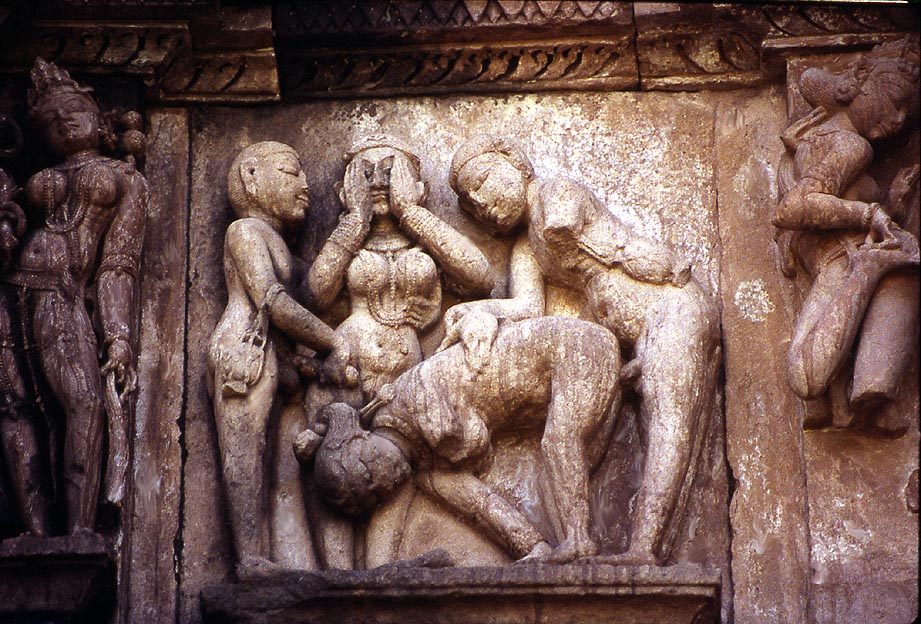
Two "embarrassed" maidens assisting a love-making couple |
|
Another well-known scene, and again the male on the left violates Hindu customs, which requires that only the left hand be used in love-making. |
|
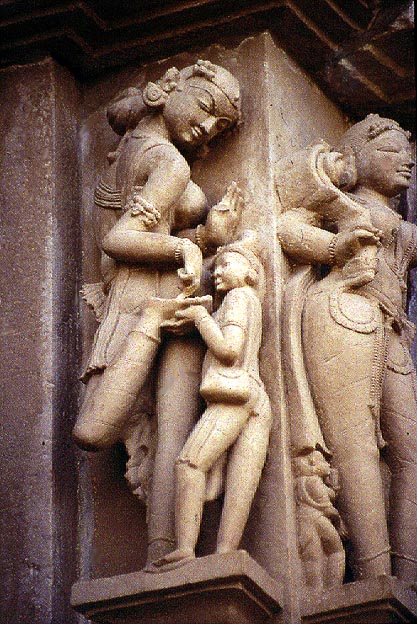
One of several maidens who pull thorns from their foot. |
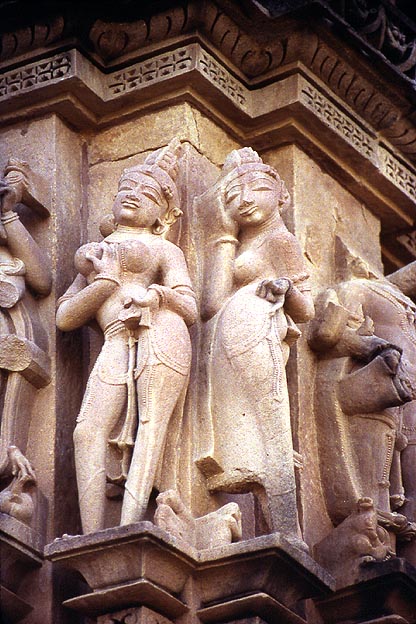
Not all maidens are active, these two are half-asleep |
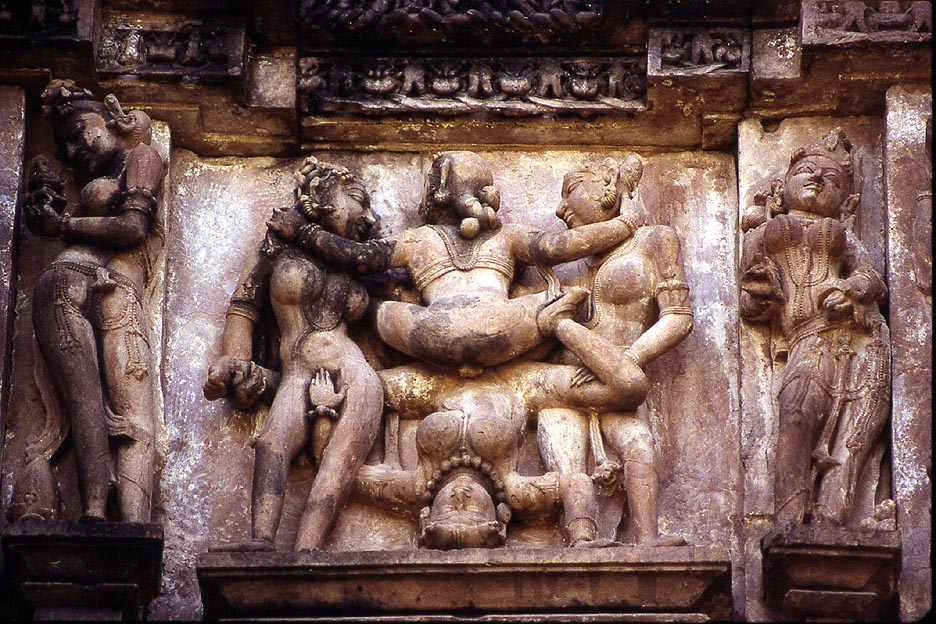
A nearly impossible Tantric Yoga position. The male is on top! |
|
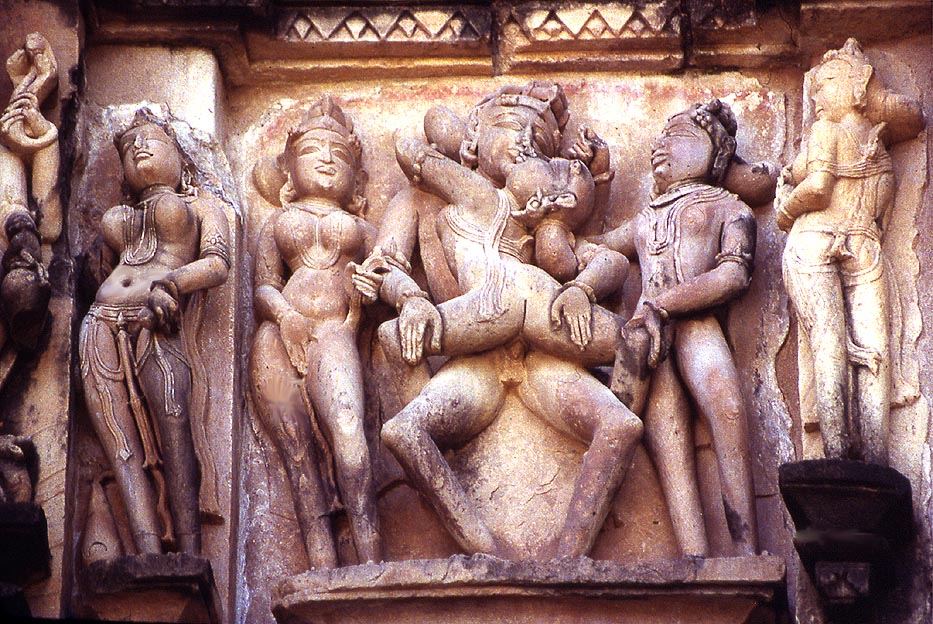
A classical Tantric "Yab-Yum" position, although in Tibet the amorous attendants are missing |
|
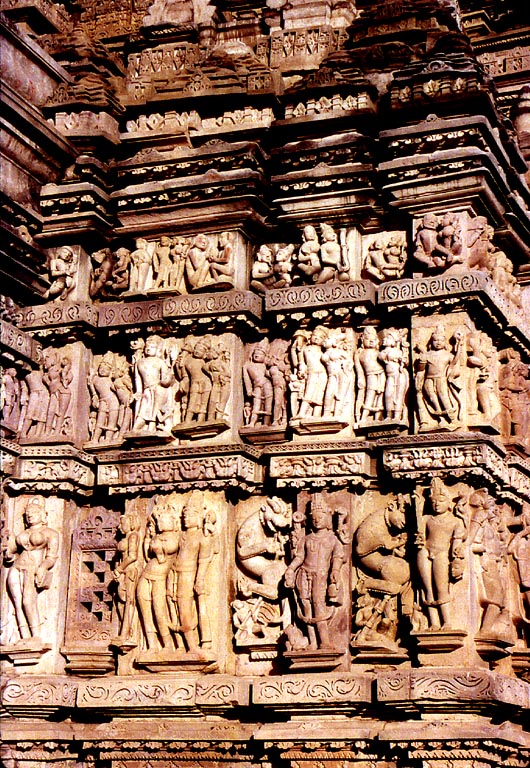
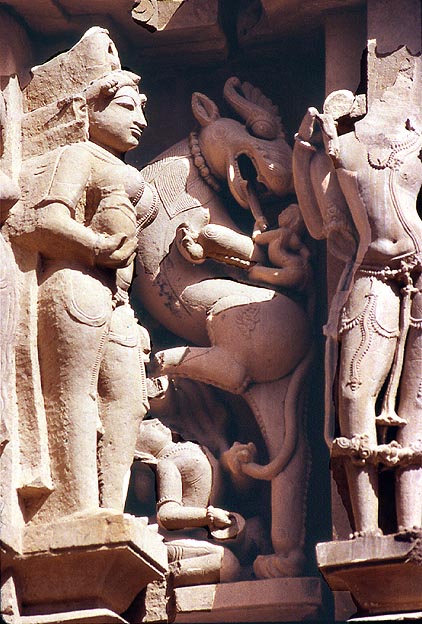
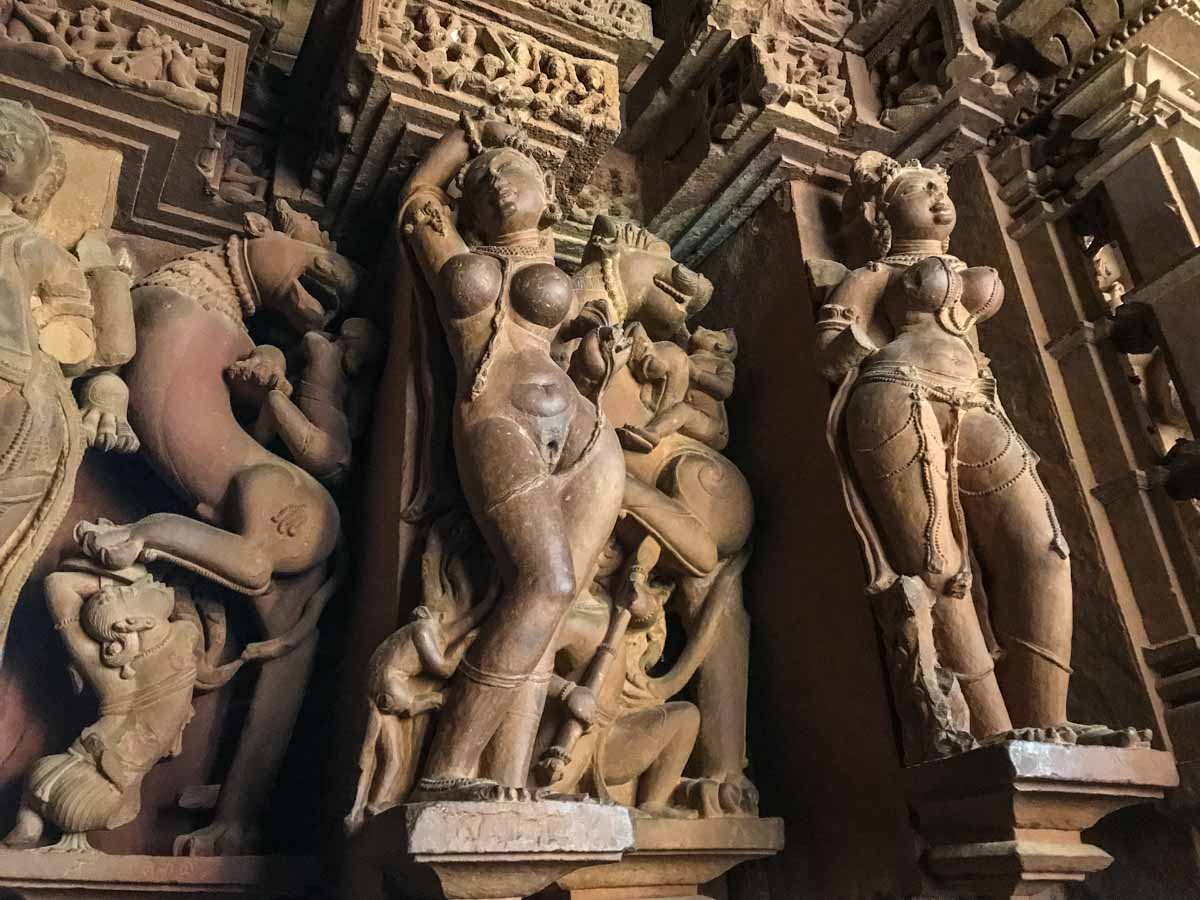
A few miles south of the Hindu temples is a complex of three Jain temples. We rented a bicycle in the late afternoon to pedal there. They are more modest and their sculptures more formal and less dynamic — and certainly not tantric. Many sardulas — strange hybrid lions — adorn the niches. Often earthlings poke at them with sticks and weapons. — Sardulas also appear in the Alchi murals (1064) where they represent the power and temptation of desire. |
A
sardula being teased by an earthling — or is he
cleaning its teeth |
 |
|